EPC C by 2030: What It Really Costs a Nottinghamshire Landlord
What the Government Actually Confirmed — and When
On 21 January 2026, the government confirmed that all private rented properties in England and Wales must hold a minimum EPC rating of C by 1 October 2030, unless a valid exemption applies. That's the date according to The Independent Landlord, which tracked the consultation outcome closely. No more speculation. No more 'it might change.' The policy is confirmed.
I've spoken to landlords in Mansfield and Sutton-in-Ashfield who still think this might get kicked down the road again. It won't. The political pressure behind energy efficiency in housing is too strong now, and the 2030 date gives the government a clean run before the next scheduled election cycle. Plan around it as fixed.
If your property already holds a C or above, you can stop reading and go make a brew. But if it's a D, E, F, or — and this happens more than people admit — an expired EPC with an assumed low rating, you need to know your numbers.
The Real Numbers: £6,100 to £6,800 — and a Hard Cap at £10,000

The HomeOwners Alliance estimates the average cost of upgrading a property to EPC C sits between £6,100 and £6,800. That's a national average, so treat it as a floor for planning purposes, not a ceiling. Older properties — and we have a lot of those around Mansfield and Sutton — tend to run higher because they often need multiple measures rather than one silver bullet.
Here's the figure that matters most in practice: the £10,000 cost cap. Under the current framework, landlords are not required to spend more than £10,000 per property to achieve EPC C. Spend up to £10,000, do what you can, and you've met your obligation even if the property still falls below C. That cap is per-property, not per-portfolio.
There's also a high-cost exemption worth knowing about. If the cheapest single qualifying improvement costs more than £3,500, you can register an exemption on the PRS Exemptions Register. That sounds like a get-out clause. It isn't, really. The exemption lasts five years, after which you're back in the same position — and energy costs will have moved on. I'd rather see landlords spend the money now and have a genuinely marketable property than rely on an exemption that expires.
Common upgrade measures that push a D-rated terrace toward C include loft insulation (roughly £300–£600 for a standard terrace), cavity wall insulation (£400–£800), a modern condensing boiler replacement (£2,000–£3,500), and in some cases solid wall insulation — which is where costs balloon fast. Solid wall insulation on older Nottinghamshire stock can run £5,000–£8,000 alone. If your property needs that, the £10,000 cap becomes very relevant very quickly.
Why Mansfield and Sutton-in-Ashfield Landlords Face a Steeper Hill
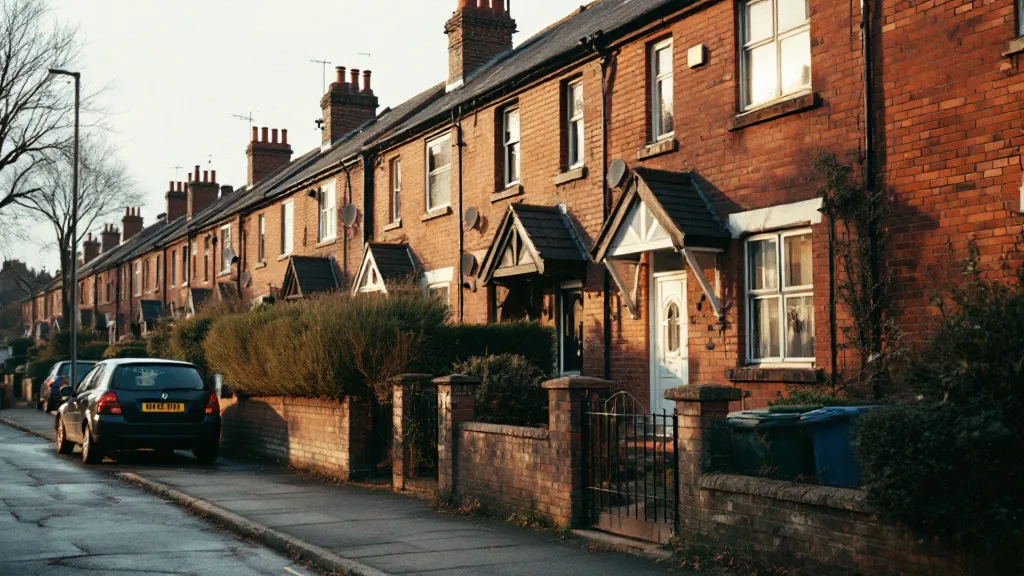
Rightmove data puts the average sold price for a terraced property in Mansfield at around £134,545. That tells you something important about the stock profile here. These aren't new-build apartments with A-rated heat pumps and triple glazing. These are pre-1980s — often pre-1960s — brick terraces, many of which were built before cavity walls were standard, let alone insulation.
A D rating on a property like that isn't a failure. It's almost inevitable given the construction era. But D is exactly the rating that requires action under the new rules, and the gap between D and C is often wider in practice than the letter grade suggests.
I've seen landlords in this area get an EPC assessment and assume the recommendations are optional suggestions. They're not — not after October 2030. The assessor's recommended improvement measures are the roadmap. The ones marked as 'low cost' should already be done. The ones marked 'medium cost' need budgeting now.
The other local factor: Nottinghamshire has a healthy supply of older HMO stock, particularly around Mansfield town centre. HMOs face the same EPC C requirement, and because they often have more rooms, more heat loss points, and older communal systems, the upgrade costs per property can exceed the single-let average. If you're running a licensed HMO and haven't had an EPC done recently, that's the first call to make.
What to Do Right Now — Not in 2029
The single biggest mistake I see is landlords treating 2030 as a 2029 problem. It isn't. Here's why the timeline matters:
First, the demand for qualified energy assessors and approved installers is going to spike as 2030 approaches. That's not speculation — it happened ahead of the 2018 and 2020 EPC E deadlines. Contractors who do cavity wall insulation and boiler replacements in Nottinghamshire are already seeing increased enquiries. Book early or pay a premium later.
Second, some improvement works require planning permission or listed building consent. Solid wall insulation on a terrace in a conservation area — and there are several in the Mansfield district — can involve a planning application. That adds months, not weeks.
Third, if you're planning to remortgage or sell before 2030, a low EPC rating is increasingly a valuation issue. Lenders are starting to price energy efficiency into mortgage products. A D-rated property is a harder sell than it was five years ago, and that gap is widening.
My honest advice: get a current EPC done if yours is more than three years old or was done on a property before you upgraded the boiler or insulation. The assessment itself is cheap — typically £60–£120 — and it gives you a current baseline plus a costed improvement schedule. From there, you can decide which measures to prioritise and whether the £10,000 cap affects your planning.
Don't wait for a compliance letter. By then, your options narrow and your costs rise.
By October 2030, a D-rated rental in Mansfield isn't just an energy issue — it's an unlettable one. The landlords who'll come out of this well aren't the ones who spend the most; they're the ones who start earliest, sequence their improvements intelligently, and don't get caught paying emergency-rate contractor fees in 2029 because they left it too late. The £10,000 cap is a ceiling, not a target. Most properties in this area can hit C for less — but only if the work is planned properly, not rushed.