
How to Unlock the Equity Hiding in Your Existing Portfolio

Equity Is Purchasing Power — Stop Treating It Like Wallpaper
There's a habit I see constantly among landlords who've been in the game for three to seven years. They've got one or two buy-to-lets, both appreciating nicely, both cash-flowing. And they're saving up, month by month, for the deposit on the next one.
Meanwhile, £40,000–£80,000 is sitting in the walls of a property they already own. Untouched.
Landlord Today flagged this in April 2026 — equity is the most common route into portfolio growth and also the most underused. The phrase that stuck with me: 'equity means purchasing power.' That's exactly right. It's not abstract wealth on a spreadsheet. It's a deposit waiting to be deployed.
The confusion, I think, comes from the term itself. A lot of landlords hear 'equity release' and picture their retired parents signing over their home to a lifetime mortgage provider. That's a completely different product — an entirely separate market, aimed at older homeowners unlocking residential equity in retirement. What we're talking about here is a straightforward remortgage on an investment property, structured to release capital for reinvestment. Same word, different world.
The Refinance Cycle: How a Portfolio Funds Its Own Expansion
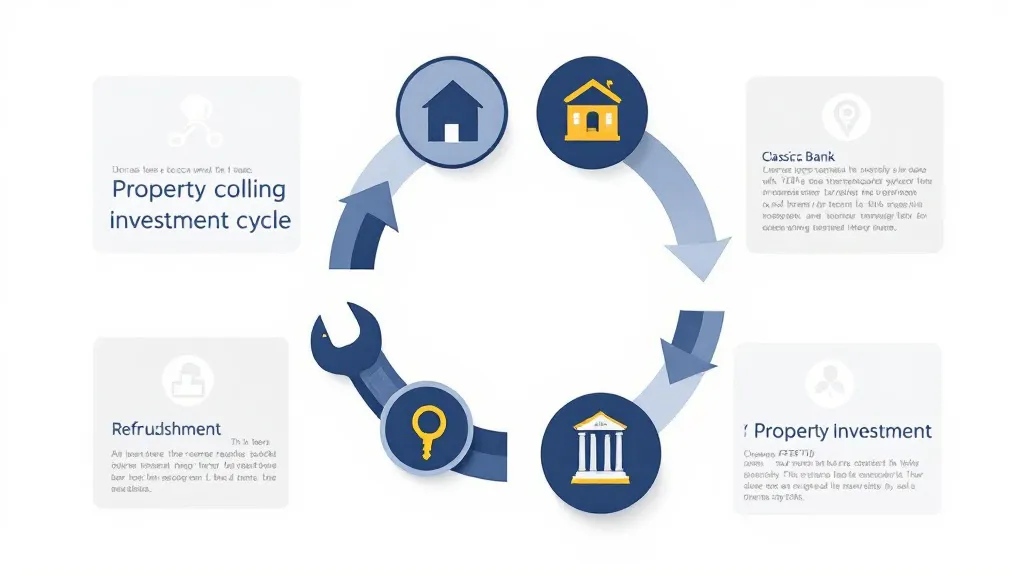
Here's the mechanic. You buy a property — let's say an HMO or a standard BTL — at £160,000. You put in a 25% deposit (£40,000) and take a mortgage for £120,000. Over three years, the property appreciates to £200,000 and you've paid down a little of the mortgage. Your outstanding balance is, say, £118,000.
At 75% LTV against the new £200,000 value, a lender will advance up to £150,000. Your current mortgage is £118,000. That's a potential £32,000 released — tax-free at the point of release, because it's debt, not income. That £32,000 is your next deposit.
This is the BRRR cycle in its simplest form: Buy, Refurbish (or just hold), Refinance, Repeat. It's not a secret strategy. Mortgage brokers like UK Money Man have written about capital raising for portfolio expansion for years. But knowing the concept and actually executing it are two different things.
A few mechanics worth understanding before you call a broker:
First, the 75% LTV ceiling. Most specialist BTL and HMO lenders cap capital-raising remortgages at 75% loan-to-value. Some will go to 80% in certain circumstances, but 75% is the working assumption. Any equity above that ceiling is accessible; anything below it stays locked in.
Second, rental stress-testing. The new, higher mortgage must still pass the lender's rental coverage calculation. Typically lenders want rent to cover 125%–145% of the mortgage payment at a stressed interest rate (often 5.5%–6.5% depending on lender and product). If the rent doesn't cover the new payment at that stress rate, the remortgage either doesn't proceed or proceeds at a lower loan amount.
Third — and this is the one that catches people — CGT. Releasing equity doesn't trigger Capital Gains Tax, because you haven't sold anything. But Mortgage Scout and others have rightly pointed out: when you eventually sell, CGT is calculated on the full gain from original purchase price to sale price, regardless of how much equity you extracted along the way. Leave enough equity in the property to cover that future liability. Don't strip it to zero.
Portfolio Landlords: Why the Rules Change at Property Number Four
If you own four or more mortgaged properties, you're a portfolio landlord under the Prudential Regulation Authority's 2017 underwriting standards. That classification matters enormously when you're trying to release equity.
Under portfolio landlord rules, lenders don't just assess the property you're remortgaging. They assess your entire portfolio — every property, every mortgage, every void rate assumption. Total borrowing is typically capped around 75% across the whole portfolio, not just the individual asset. Rent cover requirements are applied portfolio-wide. Some lenders require a full business plan.
This is where most experienced landlords get tripped up. They approach a high-street lender or use a generalist broker who doesn't specialise in portfolio cases, and they hit walls they didn't expect. The application stalls. The offer comes back lower than anticipated. Or it gets declined entirely on criteria that a specialist lender wouldn't have applied.
I'm not going to pretend this is simple. For a portfolio landlord trying to release equity across multiple properties simultaneously — or trying to free up capital to buy an HMO in a new area — the broker you use matters more than almost any other variable. You need someone who knows which lenders apply which stress tests, which ones have the most favourable portfolio assessment criteria, and which ones have actually done deals like yours before.
That's precisely why ZARSK works with regulated finance partners who specialise in exactly this. Not generalist mortgage advisers. Specialists who spend their days on portfolio cases and capital-raising remortgages. If you're at the stage where equity is sitting in your portfolio and you want to put it to work — particularly to fund an HMO acquisition — speaking to them is the logical next step. You can find them at [zarsk.co.uk/finance-property](https://www.zarsk.co.uk/finance-property).
What to Do Before You Pick Up the Phone
Before you speak to any broker, do this homework. It takes an hour and it will make the conversation significantly more productive.
Get a current valuation on each property you're considering remortgaging. Not the Zoopla estimate — an actual agent appraisal, or better, a RICS-qualified surveyor's opinion. Lenders will instruct their own valuation, but knowing the likely figure before you apply means you can model the numbers accurately.
Pull your current mortgage statements. Know your outstanding balance on each property to the penny. Calculate your current LTV. If you're already at 72% LTV, there's not much room. If you're at 55%, there's meaningful capital to release.
Check your rental income against likely stress-test rates. Take your expected new mortgage payment (use a calculator assuming 5.5% on the higher loan amount), multiply by 1.45, and check whether your current rent covers that figure. If it doesn't, you'll need to either accept a lower loan or look at properties with stronger rental yields.
And think carefully about what you're releasing equity for. Lenders ask. 'Portfolio expansion' or 'deposit for further property purchase' are entirely acceptable purposes. 'Paying off personal debts' or 'holiday' are not. Have a clear, documented purpose.
One more thing: timing. Remortgaging mid-fix can trigger early repayment charges — sometimes 3%–5% of the outstanding balance. If your fixed rate ends in the next six months, it's often worth waiting. If it ended recently and you're on a reversion rate, you're almost certainly paying more than you need to and a remortgage makes sense on its own terms, equity release aside.
This isn't financial advice — your specific situation needs a qualified adviser to review it properly. But this groundwork means you walk into that conversation knowing your numbers, not learning them from the broker.
Here's what I actually think about this: the landlords who build portfolios of eight, ten, fifteen properties in a decade aren't smarter or luckier than the ones who stay at two or three. They just figured out earlier that their existing assets are the engine, not a destination. Every property that appreciates and sits unrefined is a deposit that hasn't been deployed yet. The refinance cycle isn't aggressive or risky — it's just how capital-efficient portfolio building works. The landlords who treat their equity like wallpaper will still be saving for their next deposit in five years. The ones who treat it like purchasing power will have used it twice by then.