
I Watched a Landlord Get Fined £30,000 for a Room That Was 0.3m² Too Small
The Day the Enforcement Officer Knocked
Camden Council issued a £30,000 civil penalty for an unlicensed HMO. Newham Council handed out a £25,000 penalty plus an £18,000 rent repayment order in 2024 alone. And in Brent, Sanjay Patel was hit with a staggering £91,788 fine — prosecuted at Willesden Magistrates' Court after his Wembley HMO was found to have more than 18 people occupying a property licensed for seven, with non-functioning fire alarms and a family with a four-month-old baby living in an undeclared outbuilding with no heating or electricity, as reported by [landlordtoday.co.uk](https://www.landlordtoday.co.uk/breaking-news/2026/03/hmo-landlord-clobbered-with-92000-fine/).
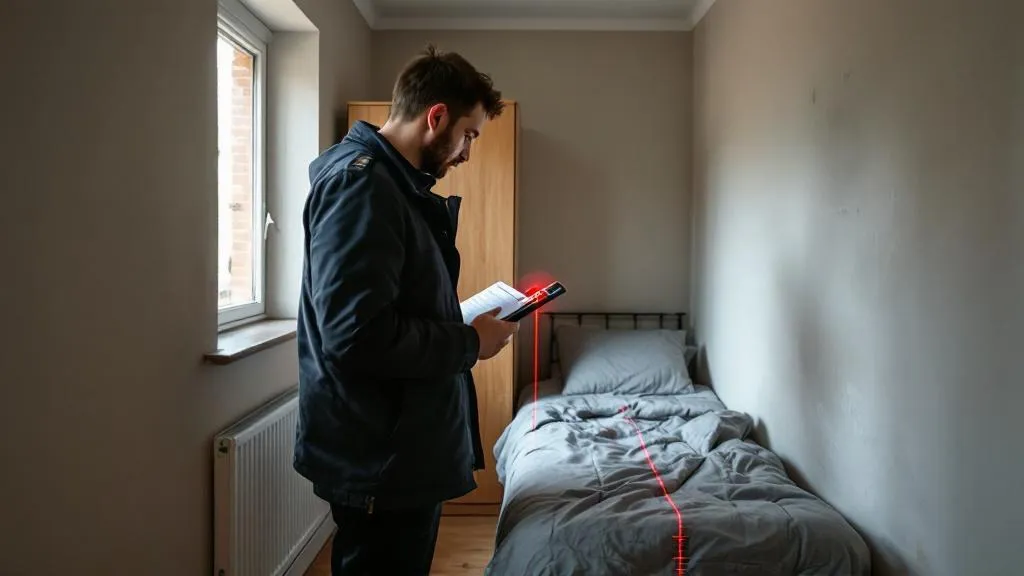
Those are the extreme cases. But the one that stays with me is quieter. A landlord — experienced, not a rogue, someone who'd been operating HMOs for years — received an enforcement notice because one of his bedrooms measured 6.2 square metres. The legal minimum for a single adult occupant is 6.51m². The shortfall was 0.31 square metres. Roughly the size of an A4 sheet of paper, repeated about twelve times.
The fine: £30,000.
He didn't know. That's the part that matters.
The Numbers That Actually Govern Your Rooms
The Licensing and Management of Houses in Multiple Occupation (England) Regulations 2006, as updated by the Mandatory HMO Licensing requirements that came into force in October 2018, set out the minimum floor areas that every HMO landlord must meet. The BoroughReady HMO Compliance Guide 2026 summarises them clearly:
— 6.51m² minimum for a single adult occupant — 10.22m² minimum for two adults sharing — 4.64m² minimum for a child under ten — and any room below this threshold cannot legally be used as sleeping accommodation at all
Those numbers look simple. They're not, because the way you measure matters as much as the result.
Sloping ceilings are the most common trap. Floor area only counts where the ceiling height exceeds 1.5 metres. So if you have a loft conversion bedroom with a pitched roof, a significant portion of that floor space may be legally invisible. A room that appears to be 7m² on a floor plan could qualify as under 6.51m² once you exclude the area under the slope. I've seen landlords genuinely shocked when this is explained to them at the point of inspection — not before.
The second mistake is including built-in storage in the floor area calculation. Fitted wardrobes, built-in cupboards, alcoves with shelving — councils measure habitable sleeping space. That wardrobe alcove doesn't count.
The third is measuring before furniture is placed. Some councils and inspectors assess whether the room can practically function as sleeping accommodation given the furniture required. A room that technically clears 6.51m² but has the door opening into the only viable bed position is going to attract scrutiny.
Get a laser measure. Measure twice. Then measure again with the sloping ceiling rule applied.
Why Enforcement Has Become Unavoidable

Council inspections of HMOs have risen 83% since 2018, and enforcement actions have jumped 180% over the same period, according to Freedom of Information data compiled by Just Landlords. That's not a rounding error. That's a structural shift in how local authorities treat HMO compliance.
Lewisham leads the country with 288 enforcement actions annually. Blackpool has a 70% application refusal rate for HMO licences. These aren't outliers — they're signals of where the entire sector is heading.
The Renters Rights Act, which began its first implementation phase in 2026, has added further impetus. Councils now have expanded powers and, critically, expanded political incentives to act. Housing enforcement is visible, popular with residents, and generates revenue through civil penalties. A £30,000 fine costs the council very little to issue and funds further enforcement activity.
So the old calculation — 'I'll fix it if they find it' — doesn't hold anymore. Inspections are proactive, not just complaint-driven. Lewisham's 288 annual actions didn't all come from tenant complaints. Many came from systematic licence audits.
And the penalties compound. A room-size breach can trigger a licence review. A licence review can expose other deficiencies. Other deficiencies can produce multiple penalties. The landlord who started with a 0.31m² shortfall can end up facing a civil penalty, a rent repayment order covering up to 12 months of rent, and a licence suspension — all from one inspection.
What to Do Before the Knock Comes
Measure every room now. Not when you're renewing a licence. Not when a tenant complains. Now.
Use a laser distance measurer — a decent one costs under £40 and pays for itself the first time it saves you from a compliance breach. Measure the full floor area, then subtract any portion where the ceiling is below 1.5 metres. Subtract any built-in storage. What's left is your legal floor area.
If a room comes in under 6.51m² for a single occupant, you have options — but they need to happen before an enforcement officer arrives, not after. You can regrade the room as storage, reduce the licensed occupancy of the property, or in some cases reconfigure the space. What you cannot do is hope the inspector doesn't measure it.
For anyone operating in high-enforcement boroughs — Lewisham, Newham, Camden, Brent — I'd go further. Commission an independent pre-inspection compliance audit. Several specialist HMO compliance consultants offer this service, and the cost is trivial against a £30,000 civil penalty.
Also worth knowing: if you're uncertain about how your specific council interprets the measurement rules — particularly for loft conversions or rooms with irregular shapes — you can request a pre-application discussion with the licensing team before submitting or renewing your licence. Most councils will engage. They'd rather you comply than fine you. Most of them, anyway.
If you want a structured approach to HMO compliance across your portfolio, [ZARSK](https://zarsk.co.uk) has tools built specifically for this — tracking licence conditions, room sizes, and inspection readiness in one place rather than across a spreadsheet that gets updated when you remember to update it.
The landlord with the 0.31m² shortfall wasn't rogue. He wasn't cutting corners on fire safety or cramming extra tenants into rooms. He just hadn't measured carefully enough, and he hadn't accounted for the sloping ceiling rule. £30,000 later, he had. The enforcement environment has changed permanently — councils have the powers, the incentives, and increasingly the staff to find these breaches. The question isn't whether your rooms will be measured. It's whether you'll measure them first.